
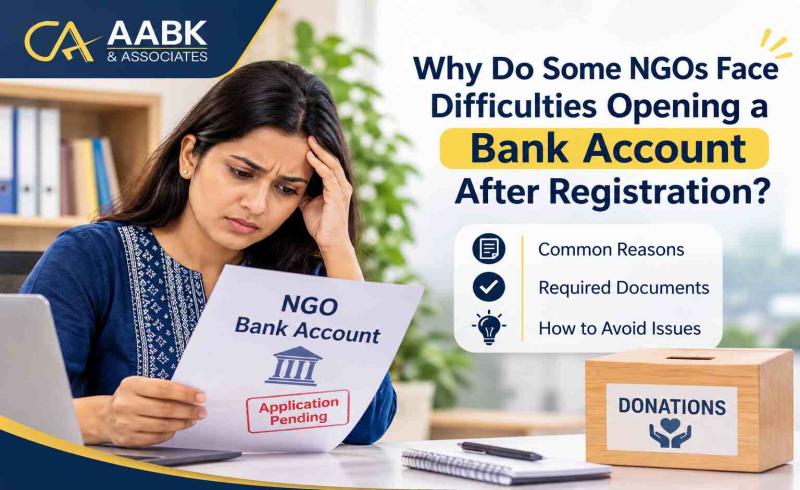
Registering an NGO is an essential process that can be done to serve a particular social cause. Nevertheless, once the NGO is registered, it should not be assumed that all other forms of formalities have been taken care of. Most founders usually find it tough to deal with banks while attempting to open an account for their NGO.
This is where NGO bank account opening can become confusing, especially for new founders. At AABK & Associates, we know that having information about basic banking formalities can assist organizations in avoiding such problems.
An NGO registration certificate alone will not be sufficient for completing the banking process. The bank needs to confirm the identity, address, PAN, documents, and authorised signatories of the organisation.
Requirements also vary depending upon whether the organisation has been registered as a trust, society, or section 8 company.
Banks may require a Trust Deed, Certificate of Incorporation, or Society Registration Certificate. Any missing information in the documentation will cause a delay in the application process.
The importance of a PAN card is crucial for any financial transactions that the organisation undertakes. In case the NGO lacks a PAN or the name does not tally with that in the registration certificate, the bank can ask for a change.
Banks need to know who can operate the account. A board resolution or governing body authorisation may be required to confirm the authorised signatories.
Banks generally ask for registered office address proof. Differences between the address mentioned in registration documents and the submitted proof may lead to additional verification.
Banks may request identity and address proof of trustees, directors, office bearers or authorised signatories, as applicable. Missing or outdated KYC documents can slow down the process.
Banks may ask about the organisation's charitable objectives, expected transactions and sources of funds. Founders should be able to explain their activities clearly.
Even small differences in the NGO's name, address or other details across documents can create problems. Check all documents carefully before submitting the application.
Although requirements vary between banks, the commonly requested documents include:
If you are planning the Registration of ngo, keeping these documents organised from the beginning can make future banking work easier.
Yes. The documents required may depend on the organisation's legal structure. A Trust may need its Trust Deed and trustee authorisation, while a Society may need its registration certificate and governing body resolution. A Section 8 Company generally needs incorporation documents and board authorisation.
If you are still deciding which structure suits your charitable objectives, understanding the process of Registration of trust can help you make a better decision.
At AABK & Associates, we help individuals and organisations understand registration formalities and related documentation.
No. Every NGO needs 12AB or 80G approval simply to open a bank account. These registrations serve different income tax purposes.
Section 12AB relates to income tax exemption for eligible organisations, while Section 80G allows eligible donors to claim deductions on qualifying donations, subject to applicable conditions. They are not universal bank account opening requirements.
However, organisations planning to receive eligible donations may consider Registration under section 80G as part of their future compliance planning.
A little preparation can help prevent repeated bank visits and delays.
Opening a bank account is an important step in managing an NGO's finances. However, registration alone does not complete every banking requirement. Banks must verify the organisation's documents, address and authorised representatives before approving an application.
At AABK & Associates, we assist organisations with registration, taxation, accounting and compliance-related requirements. Visit our Google Business Profile to learn more about our services.
Planning to start an NGO? Connect with AABK & Associates for practical guidance on registration and documentation.
Yes. An NGO can apply after registration, provided it fulfils the bank's documentation and KYC requirements.
Yes. 12AB registration is not a universal requirement for opening an NGO bank account.
A current account is commonly used for regular financial transactions. The final choice depends on the bank's policies and the organisation's needs.
Yes, if the governing documents and proper authorisation permit it and the bank accepts the arrangement.
Ask the bank for the reason, correct any missing information or documents and submit the application again.