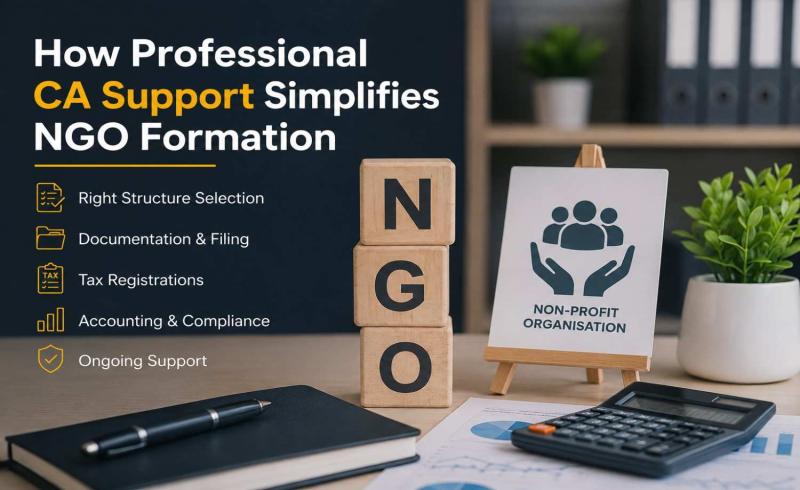

Have you thought about what kind of organisation you want to build? Is a Trust, Society, or Section 8 Company right for your work? Choosing the right legal structure for NGO affects your documents, management, registration authority, and future compliance. AABK & Associates helps people understand these differences before they begin. If you are planning Registration of ngo, knowing the structure first can make the rest of the process easier.
The choice of NGO legal structure affects the way the NGO is managed and what documentation you must prepare. The correct legal structure for NGO depends on its objectives, management strategies, personnel and planned future operations.
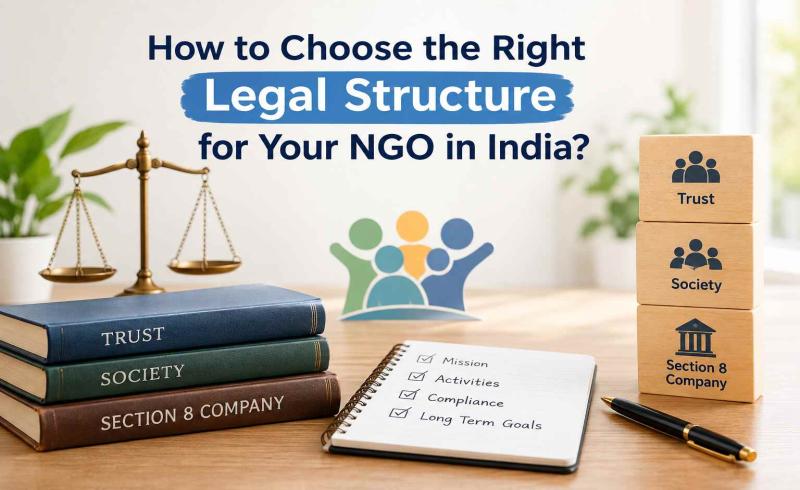
The different types of NGO in India are Trusts, Societies, and Section 8 Companies. There is no universal best legal structure for NGO. A Trust can work for a family organization, a Society for membership-based organizations, and a Section 8 Company for corporate NGOs.
A Charitable Trust is administered by the trustees. The Charter of the trust is laid out in the Trust Deed.
A Society is generally formed by members. Society registration covers its objectives and management, with the Registrar of Societies handling registration under applicable state law.
A Section 8 Company is incorporated for eligible non-profit purposes under the Companies Act, 2013. Its key documents include the Memorandum of Association and Articles of Association. The Ministry of Corporate Affairs (MCA) and Registrar of Companies (ROC) handle its incorporation.
This Trust vs Society vs Section 8 Company comparison shows why the decision should be based on how you want the organisation to work in the long run, rather than simply on cost or convenience.
Start with your purpose. Are you creating a charitable organisation, a member-led group, or a professionally managed non-profit organisation? Then consider who will make decisions and how it will be funded.
A legal structure for NGO should fit your purpose. A Trust can suit trustee-led management, a Society can work where several members want an active role, and a Section 8 Company can suit a formal framework.
Consider fundraising, staffing, expansion, reporting, and NGO compliance before registration. If unsure about choosing a legal structure for NGO, get the structure clear before preparing NGO registration documents.
The NGO registration process differs by structure. A Trust follows the applicable trust procedure, a Society deals with the Registrar of Societies, and a Section 8 Company follows the MCA route.
Understanding how to register an NGO in India starts with deciding what you are registering. For NGO registration in India, settle the structure first.
AABK & Associates can help you understand the available options and practical requirements.
Read this also: What Documents Are Required for Registration of NGO in India? A Complete Checklist
After choosing a legal structure for NGO, an eligible organisation may need to deal with the Income Tax Department and consider 12A or 80G. NGO Darpan and FCRA may also be relevant for eligible organisations.
The Income Tax Department provides specific guidance for charitable or religious trusts and institutions, including requirements connected with Section 12A and tax-related reporting. Section 80G provides deductions for qualifying donations subject to applicable conditions.
You can also explore Registration under section 12 A when relevant to your organisation.
Do not choose a structure simply because another NGO uses it. Think about your purpose, management style, funding plans, and long-term goals.
The legal structure for NGO should fit the way you intend to work.
AABK & Associates can help founders compare the options, understand the paperwork, and prepare for NGO formation in India.
The legal structure for NGO should support your plans and growth. Instead of choosing what looks easiest, consider how you want the organisation to be managed and where you want it to go. AABK & Associates can guide you through the available options and registration requirements.
For help, Contact Us with your requirements, or visit the Google Business Profile of AABK & Associates for business details and client feedback.
There is no definite answer. It will depend on the objective of the organization, its management, members, financial planning, and future goals.
Yes. A Trust is a common structure for charitable and social activities, subject to applicable requirements.
Yes. Section 8 Company is established for non-profit purposes which are allowable under the Companies Act, 2013.
Yes. Each structure has its own governance, reporting, and compliance requirements.
It may require fresh legal and registration steps, so choosing carefully at the beginning is better.